
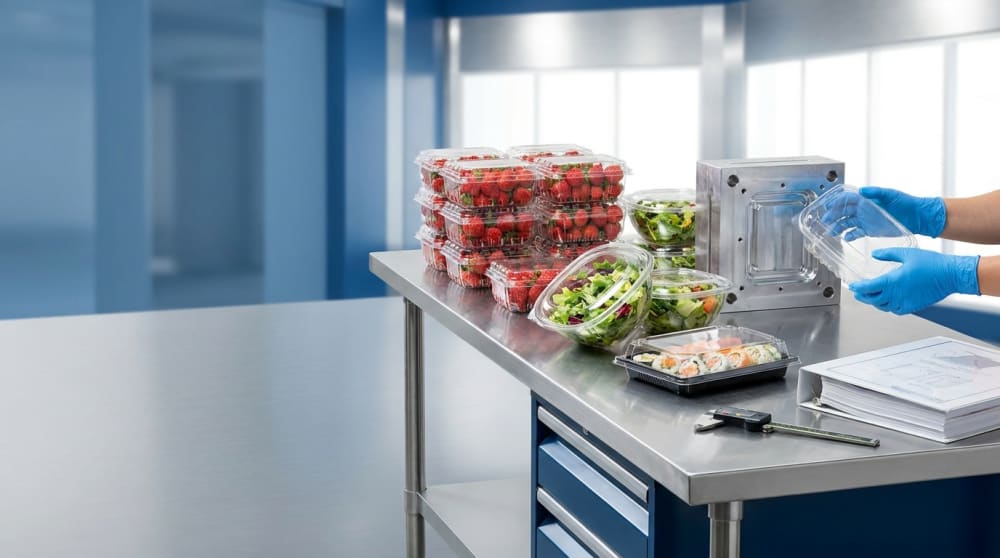
How Enterprise Teams Can Build a Lower-Impact Packaging Roadmap (Without Supply Chain Disruption)
For an enterprise managing hundreds of SKUs, multiple packing locations, and strict retail compliance rules, transitioning to lower-impact packaging is not a one-time resin swap—it is structured portfolio management. Chasing a single "eco-friendly" label without validating sealing, shelf life, and recovery pathways often increases food waste and line downtime.
Here is a practical five-step framework for procurement, packaging engineering, and QA teams to build a durable, auditable packaging roadmap.
Step 1: How do you establish a packaging portfolio baseline?#
Start by auditing every active SKU across eight core variables: resin type, unit weight, outer dimensions, annual volume, food application, damage or loss rate, distribution method, and destination market. Without a unified SKU-level baseline, enterprise teams cannot measure unit-weight reductions or identify which high-volume formats will deliver the fastest return on tooling and qualification effort.
Before evaluating alternative materials, consolidate your current packaging specifications into a single master ledger:
- Format & Geometry: Base and lid dimensions (in inches and millimeters), wall thickness, and unit weight (grams).
- Polymer & Compliance: Current resin (#1 PET, #5 PP, #6 PS), post-consumer recycled (PCR) content percentage, and food-contact documentation.
- Operational & Logistics Data: Annual order volume, automated denesting speed, case-pack count, pallet configuration, and historical transit damage or food-spoilage rates.
- Regulatory Exposure: Destination states or countries with Extended Producer Responsibility (EPR) mandates (such as California SB 54), PFAS bans, or local recycling restrictions.
Step 2: How should enterprise teams prioritize SKUs by scale and risk?#
Prioritize high-volume, mature formats for immediate lightweighting or rPET transitions, while protecting barrier and seal performance first on sensitive fresh foods. On high-risk items like fresh meat, seafood, or wet deli entrées, a 10% resin reduction that causes seal failure or premature spoilage creates far greater environmental and financial waste than the packaging itself.
| Portfolio Tier | Typical Food Applications | Primary Roadmap Action | Key Risk Guardrail |
|---|---|---|---|
| Tier 1: High-Volume, Mature Formats | Standard produce clamshells, cold bakery domes, dry deli containers | Transition from Virgin PET to PCR rPET (up to 100%), optimize case-pack density, or lightweight wall ribs | Maintain automated denesting speed and top-load stacking strength |
| Tier 2: High-Visibility Cold Case Items | Supermarket sushi trays, fresh-cut fruit, grab-and-go salads | Replace non-detectable carbon-black bases with clear/tinted PET or printed-rim clear PET | Preserve FDA 21 CFR food-contact compliant double-sided anti-fog clarity at 34°F–38°F |
| Tier 3: High-Barrier & Heat-Seal Foods | Fresh proteins (MAP/VSP), ready-to-heat meals, sauced entrées | Validate recyclable mono-material PP or defined EVOH barrier structures before changing gauge | Protect seal-flange flatness, oxygen barrier, and microbiological shelf life |
Step 3: How do you translate corporate sustainability goals into testable specs?#
Convert broad corporate pledges into measurable engineering metrics—such as unit-weight reduction, PCR percentage, packs per master case, damage rate, and batch traceability. Never treat terms like "eco-friendly," "recyclable," or "plant-based" as universal engineering conclusions without defining the exact recovery stream and regulatory boundary.
When drafting internal project KPIs, require measurable acceptance thresholds:
- Material & Circularity Metrics: Verified PCR rPET content percentage, 100% PFAS-free formulation, and near-infrared (NIR) optical sorter detectability under Association of Plastic Recyclers (APR) Design Guide criteria.
- Cube & Freight Efficiency: Net unit-weight reduction (grams per pack), increased packs per master carton, and improved pallet stability.
- Quality & Shelf-Life Protection: Zero increase in transit crack rates, lid pop-offs, or customer moisture complaints.
- Audit Documentation: Batch-level chain-of-custody certificates, US FDA 21 CFR food-contact compliance declarations, and migration test reports.
Step 4: How do you run a real-world packaging pilot?#
Test candidate structures on representative SKUs using your actual food product, packing equipment, cold-chain journey, and customer QA standards. Lab spec sheets alone cannot predict how a thermoformed tray will denest at high speeds or hold its leak-resistant snap-fit closure after days of refrigerated vibration.
With 23 years of vertically integrated thermoforming experience—spanning raw sheet extrusion, in-house CNC mold tooling (+/-0.15 mm tolerances), and BRCGS-certified Class-100,000 cleanroom production—Raytek Packaging supplies physical sample kits and custom prototypes across established PET, PCR rPET, and PP formats. During a pilot, verify:
- Line Machinability: Smooth separation on automated denesters and consistent heat-seal or snap-fit closure force.
- Thermal & Moisture Journey: Anti-fog performance and structural rigidity from blast chilling through retail multideck display.
- End-of-Life Alignment: Alignment with local municipal recovery systems and written retail buyer specifications.
Step 5: What belongs in a phased enterprise conversion plan?#
**Once a pilot passes, execute a controlled rollout covering